
by Julia DiPinto | Sep 24, 2025 | In the lab, News Briefs, Research
By Julia DiPinto and Dan Distel In a new publication, researchers use paper waste to feed Teredinibacter turnerae bacteria strains that in turn produce high-value antibiotics and enzymes, such as Turnercyclamycin and Tartrolon E. (Image credit: Gerton et al. 2025)....

by Julia DiPinto | Aug 20, 2025 | In the lab, News Briefs, Research
By Julia DiPinto, Hannah Appiah-Madson, Rosie Poulin, and Dan Distel Scientists generally consider cryopreservation—flash-freezing at extremely low temperatures—the gold standard for preserving DNA in tissues. However, there is an often-overlooked issue: tissues must...
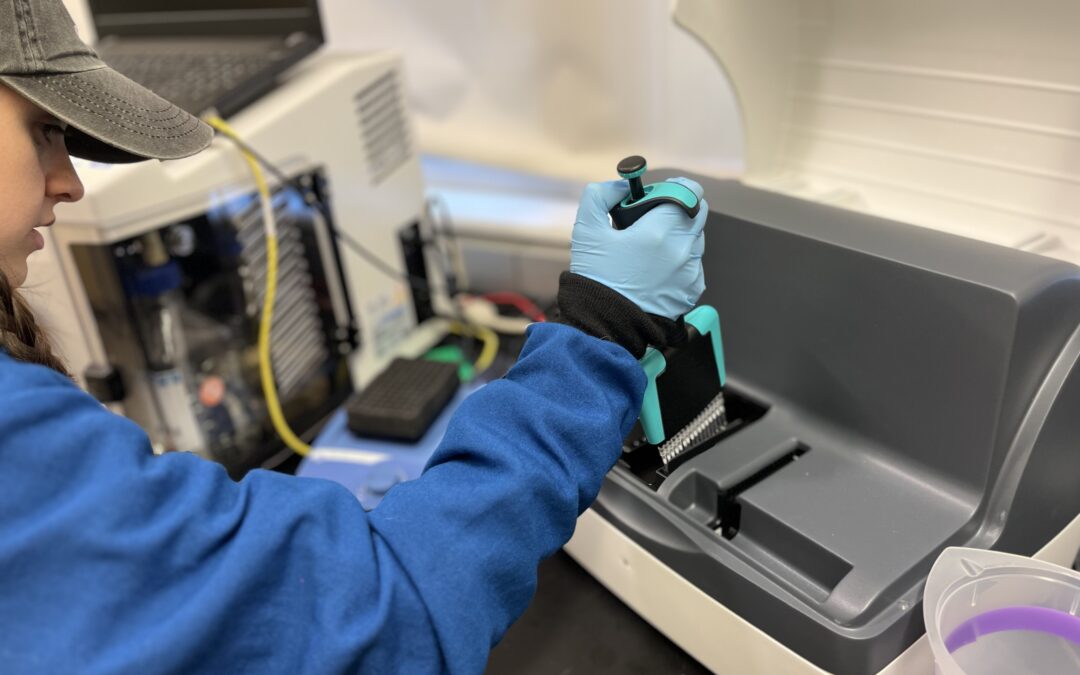
by Julia DiPinto | Jun 7, 2025 | In the lab, News Briefs, Research
By Julia DiPinto, Hannah Appiah-Madson, and Dan Distel We all know that researchers use DNA to search for hidden answers in living organisms. To do that, researchers must first ensure that their DNA samples are high quality before use. But how do they do...
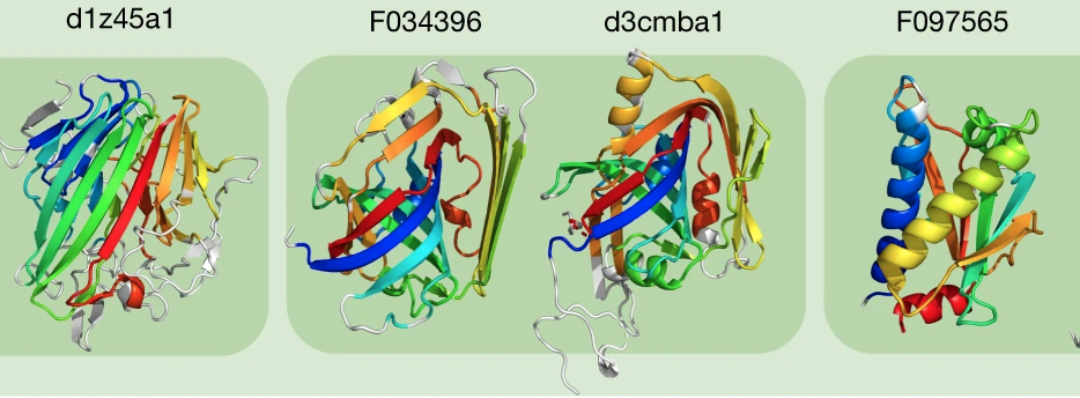
by Ryan Pianka | Nov 30, 2023 | News Briefs, Research
We all know that protein is essential to life and that our muscles, vital organs, and enzymes—the tiny molecular machines that drive life’s processes—are all made of protein. In fact, your body contains about 20,000 different proteins, each with its own unique...

by Dan Distel | Oct 12, 2023 | In the field, In the lab, News Briefs, Research
Did you know that 75–90% of the estimated 1–2 million species living in the world’s ocean remain undiscovered and undescribed? Together, these species constitute the ocean’s taxonomic dark matter—the critical portion of life’s diversity hidden beneath the waves. To...
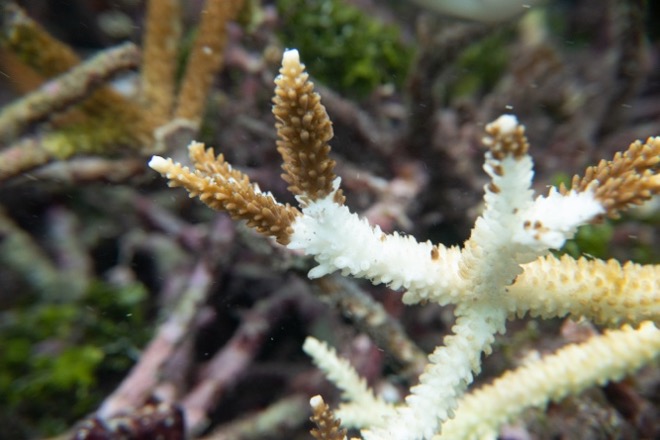
by Dan Distel | Sep 30, 2023 | In the field, In the lab, News Briefs, Research
Staghorn corals (Acropora cervicornis) were once among the most dominant reef-building corals in the Caribbean. However, starting in the mid-1980s, these iconic corals began a steep decline. Due to climate change and a mysterious bacterial plague known as “white band...
