
There’s a fish that flaps its fins like a bird, eats jellies, and likes to sunbathe—and this month, Ocean Genome Legacy (OGL) received its valuable fully sequenced genome.
The ocean sunfish, the largest bony fish and one of the most bizarre species in the world, is named for its propensity to sunbathe, floating at the surface on its side to catch the sun’s rays. In some languages it is known as the moonfish, and its Latin name, Mola mola, comes from its millstone-like appearance. What makes the ocean sunfish such a valuable contribution to the OGL biorepository is its size and growth rate. Within a few years, an individual can grow from an ant-sized fry to a creature as tall as an African elephant and as heavy as a walrus. Lacking a tail fin, the sunfish uses its massive side fins to travel more than 10 miles per day and dive 2,000 feet to catch its favorite food, jellyfish.
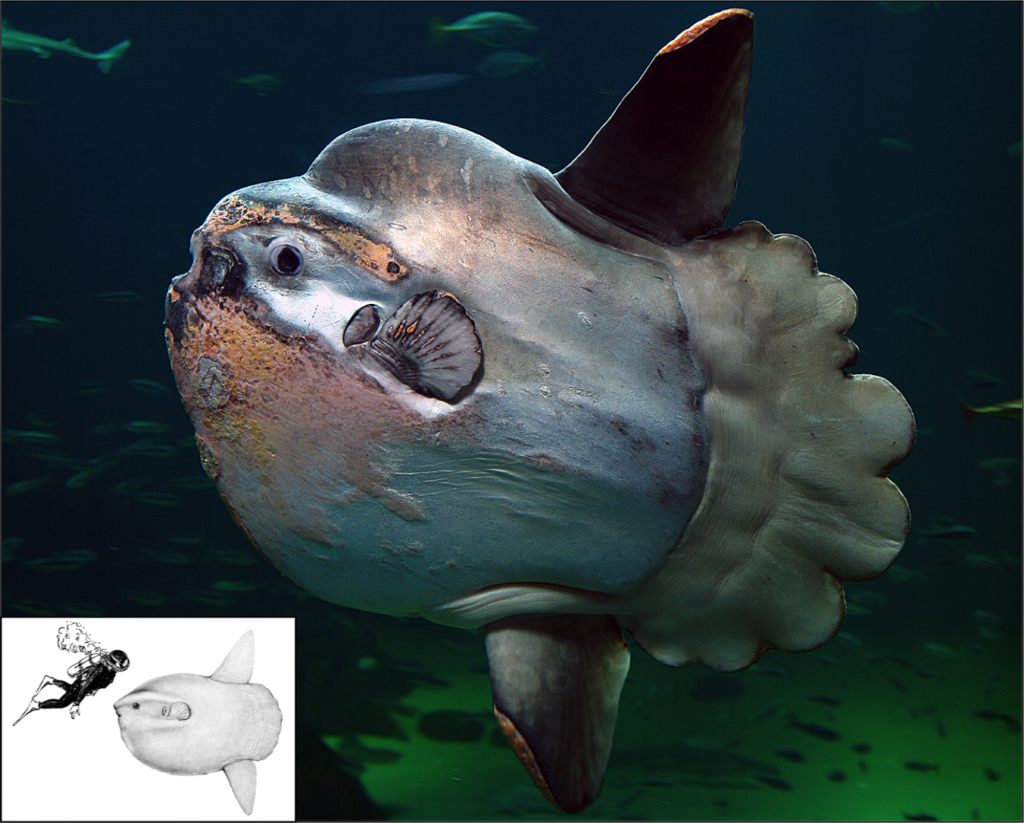
Dr. Byrappa Venkatesh at the Institute for Molecular and Cell Biology A*STAR in Singapore, along with colleagues from the Chinese Academy of Sciences, sequenced the ocean sunfish genome to better understand its unique body structure and physiology. This genome sequence provides vital information about the fast growth rate, tail-less shape, and abnormally large size of the ocean sunfish, which can help research on fish biodiversity and perhaps even human and veterinary medicine.
With great new additions like this one, the OGL biorepository works with scientists around the globe to preserve valuable DNA samples that may lead to new cures and discoveries. If you would like to support our efforts, please consider making a gift.
Have you seen a living or stranded ocean sunfish in the wild? Report your sighting at Oceansunfish.org.