
Corals are stressed! Rising seawater temperatures and other human-caused changes are stressing out corals, causing bleaching and diseased reefs around the world. Now, Ocean Genome Legacy’s (OGL) coral genome collection is helping scientists discover what makes some corals more resistant to stress than others. Please join us in protecting corals by making a gift to OGL today.
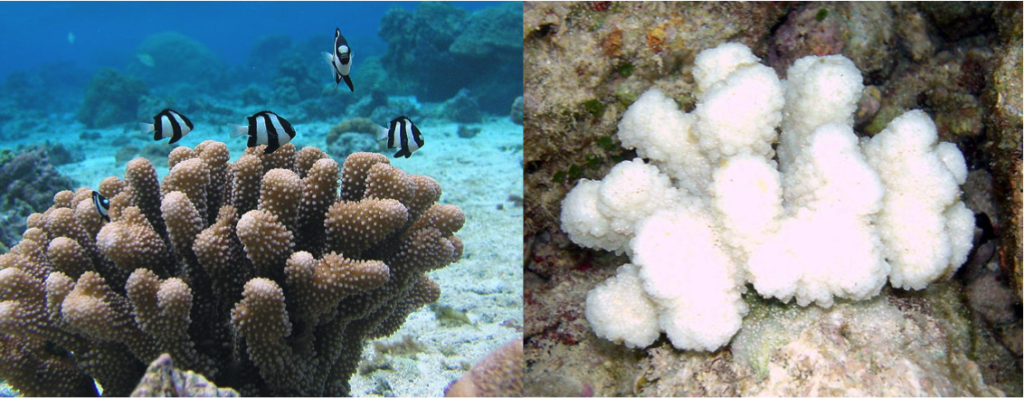


Corals are more important than you might guess. Reefs formed by stony corals, colonial sea anemone-like animals that build rocky calcium carbonate skeletons, provide home and shelter for much of the diversity of life in tropical seas. For example, about 25 percent of earth’s fish species rely on coral reefs in some way.
Some of the most important reef-building corals get energy from photosynthetic algal symbionts, called zooxanthellae, living inside their cells. Many corals need their algal symbionts to thrive—but environmental stress from temperature change and pollution is causing corals to lose algal partners in a process called bleaching. If they can’t reestablish their algal populations, the corals are more likely to die due to starvation and disease.
Some corals withstand stress and bleaching better than others. Dr. David Combosch of the Giribet Lab at Harvard University is using samples from OGL’s biorepository to test if a given coral’s genes can help predict its ability to resist bleaching. His research will help wildlife managers better protect and restore coral reefs and their many inhabitants.
If you would like to help us preserve the coral reefs, please consider making a gift to OGL today.