
Did you ever wonder where Ocean Genome Legacy (OGL) gets its DNA? For those of you who follow this newsletter, you will know that most of the time we get our DNA and tissue samples from hardcore scientists and academics. In many cases, they are some of the most respected and renowned scientists in their fields. But what you might not know is that we also get contributions from hobbyists, nature buffs, and citizen-scientists.
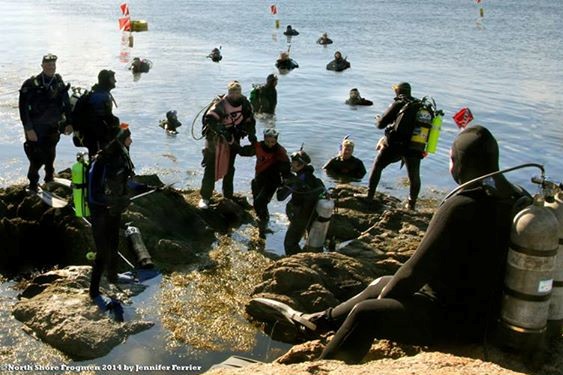
Case in point is Jim D’Urso, president of the North Shore Frogmen’s Club in Salem, MA. Jim is an avid sport diver with years of experience diving in New England and all around the world. Recently we gave Jim an OGL collection kit and turned him loose in local waters. He returned with several samples of local fish and shellfish, including species new to our collections. All were well documented with photographs and GPS coordinates.
This just goes to show that you don’t need to be a scientist to contribute to science! We look forward to future collaborations with Jim, the intrepid divers of the North Shore Frogmen’s Club, and other divers, amateur naturalists, and nature buffs interested in preserving the irreplaceable biodiversity of the sea.