
by | Mar 9, 2022

OGL’s Genome Resource Rescue Program in the NY Times

We are excited to share that the New York Times has published an article about OGL and our Genome Resource Rescue program. The article highlights 466 frozen flatworm fragments donated to OGL by Dr. Marian Litvaitis prior to her retirement, and our ongoing work with Dr. Bill Detrich who is donating samples of rare Antarctic fish to the OGL collection. 

“Preserving collections for posterity is a tenet of good science,” said Dr. Distel. We hope this article can encourage scientists to make plans for their collections after retirement and teach non-scientists about the work that goes on behind the scenes!

Read more about the Genome Resource Rescue program and why this work is important here: nytimes.com/2022/03/08/science/frozen-flatworm-retriement.html 
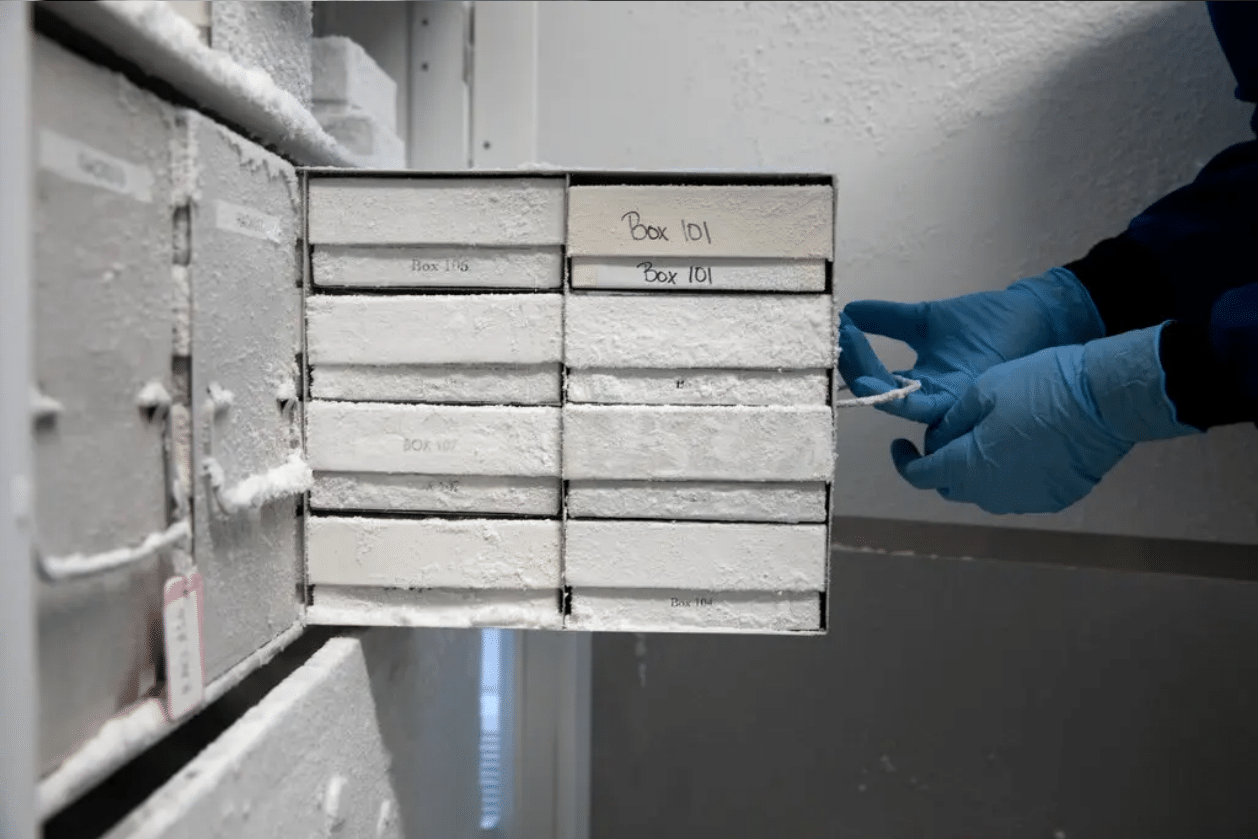
Hannah Appiah-Madson shows where flatworm fragments from Dr. Litvaitis are stored in a freezer at OGL. (Photo Credit: Kayama Szymczak, New York Times)

Interested in helping OGL rescue more valuable collections? Support us here. 

RECENT NEWS BRIEFS

OGL joins the Earth BioGenome Project!

By Emily Stangel, Collection Assistant Co-op and Dan Distel, Director of OGL We are excited to announce that the Ocean Genome Legacy Center (OGL) has joined the Earth BioGenome Project (EBP)! A global network of more than 60 affiliated organizations and initiatives,...

Spooky Scary Skeleton Shrimps! 

By Julia DiPinto and Dan Distel Get ready for Halloween by learning about a spooky species that OGL has in our very own biorepository: the skeleton shrimp!   These fascinating creatures are also known as “ghost shrimp” because of their ability to hide along...

The Harm in “Harm”

By Dan Distel Protection for endangered species means a great deal to the Ocean Genome Legacy Center—and to the U.S. Congress, if the text of the Endangered Species Act (ESA) is any indication. Polls show that more than 80 percent of Americans also support the ESA....

X